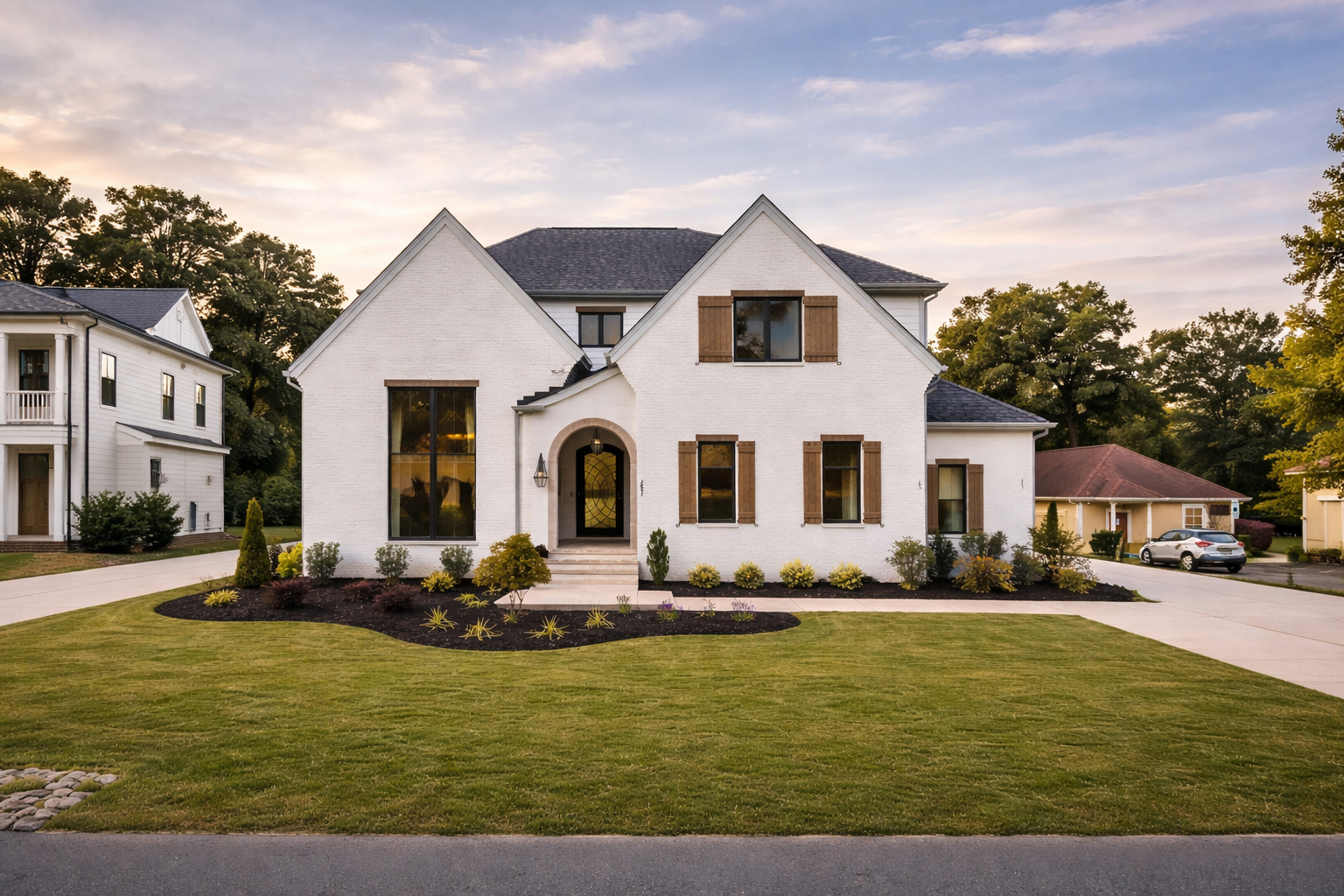
The Research Triangle is one of the fastest-growing regions in the country. Wake County alone added over 20,000 new residents last year. With that growth comes construction activity at every price point, from entry-level subdivisions to fully custom homes on private lots. The range in cost is enormous, and the lack of straightforward information makes planning harder than it should be.
This guide is our attempt to fix that. We'll walk through what drives the cost of a custom home in Wake County, what you should expect to pay per square foot, and where the real variables live. No sales pitch. Just numbers and context from a builder who does this work every day.
The Short Answer
A custom home in Wake County typically costs between $180 and $250 per square foot for construction alone. That doesn't include land. A 2,800 square foot home lands somewhere between $504,000 and $700,000 before the lot, site work, and any significant upgrades.
That range is wide on purpose. A home with builder-grade finishes on a flat lot with public utilities sits at the lower end. A home with quartz countertops throughout, hardwood on every floor, spray foam insulation, and integrated smart home infrastructure sits closer to the top. Most of our clients land between $210 and $240 per square foot once they've finalized selections.
What Drives the Cost
The biggest misconception in custom building is that the floor plan determines the price. It influences it, sure. A 3,500 square foot home costs more than a 2,200 square foot home. But two homes with identical square footage can differ by $100,000 or more depending on a handful of decisions.
Site conditions
A flat lot with municipal water and sewer is the simplest build scenario. Add a slope, a well, a septic system, or significant tree removal, and the site work alone can add $30,000 to $80,000. Rock removal, if your lot sits on it, is priced by the yard and impossible to estimate precisely until you break ground.
Structural complexity
Rooflines matter. A simple gable roof costs a fraction of a hip roof with multiple dormers. Cathedral ceilings, bonus rooms over garages, covered outdoor living spaces: each adds material, labor, and engineering. The more corners your footprint has, the more your framing and foundation cost per square foot.
Interior selections
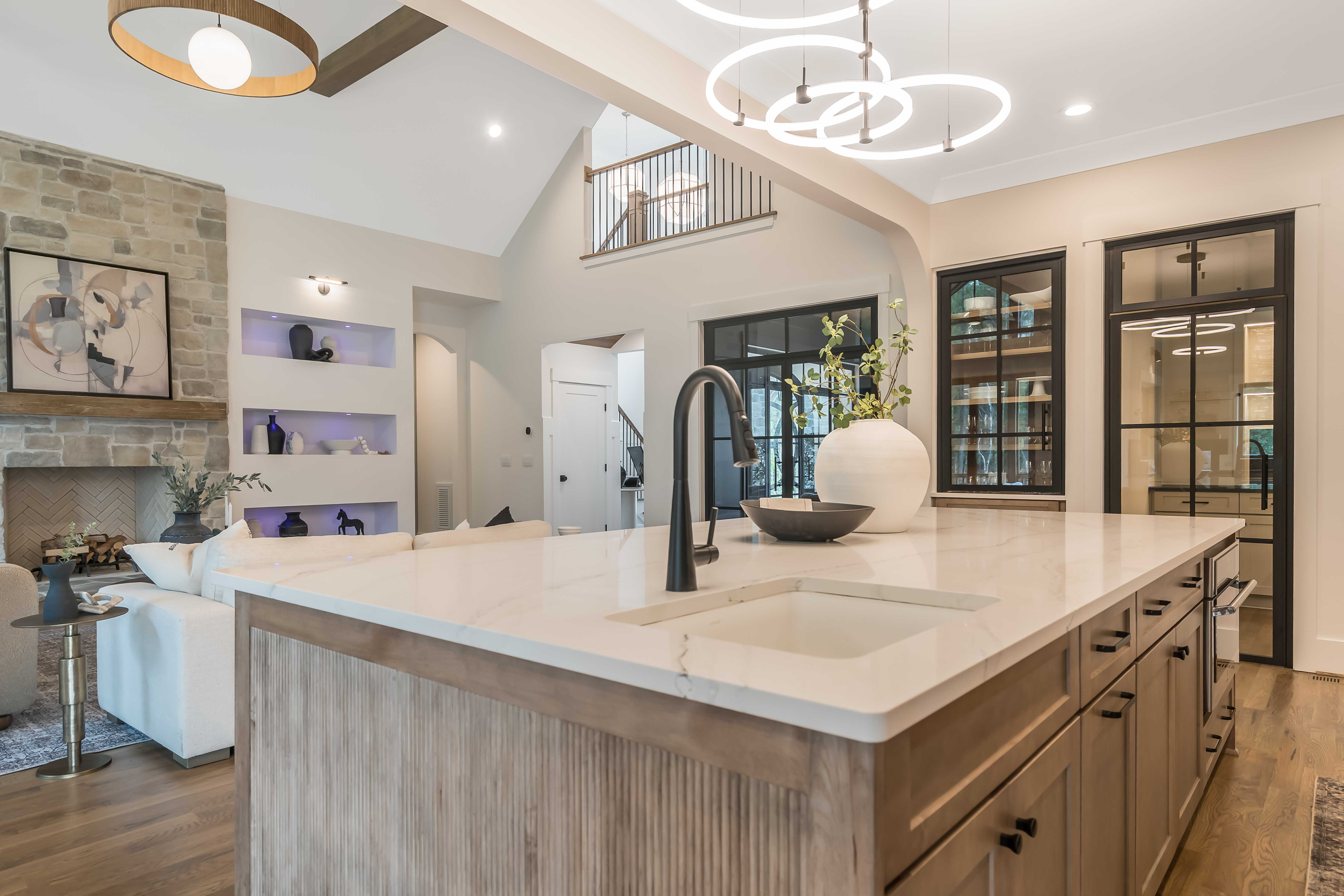
This is where most budgets shift. Cabinetry is the single largest interior line item. The difference between semi-custom painted maple and fully custom inset walnut can be $25,000 to $40,000 on the same kitchen layout. Countertops, flooring, lighting, plumbing fixtures, and tile all carry similar multipliers between standard and premium tiers.
The question isn't how much a custom home costs. It's how much of your budget goes to the things you'll actually see and touch every day.
Land and Lot Costs
In Fuquay-Varina and Holly Springs, buildable lots range from $80,000 for a half-acre in an established neighborhood to $200,000 or more for a full acre in a premium location. Apex lots tend to start higher, with half-acre parcels commonly listed between $120,000 and $250,000 depending on proximity to downtown and school district boundaries.
If you're buying raw land (unplatted acreage without an established building envelope), factor in survey, soil testing, perc testing for septic, potential easement issues, and the permitting timeline. Raw land is less expensive per acre, but the path from purchase to breaking ground is longer and less predictable.
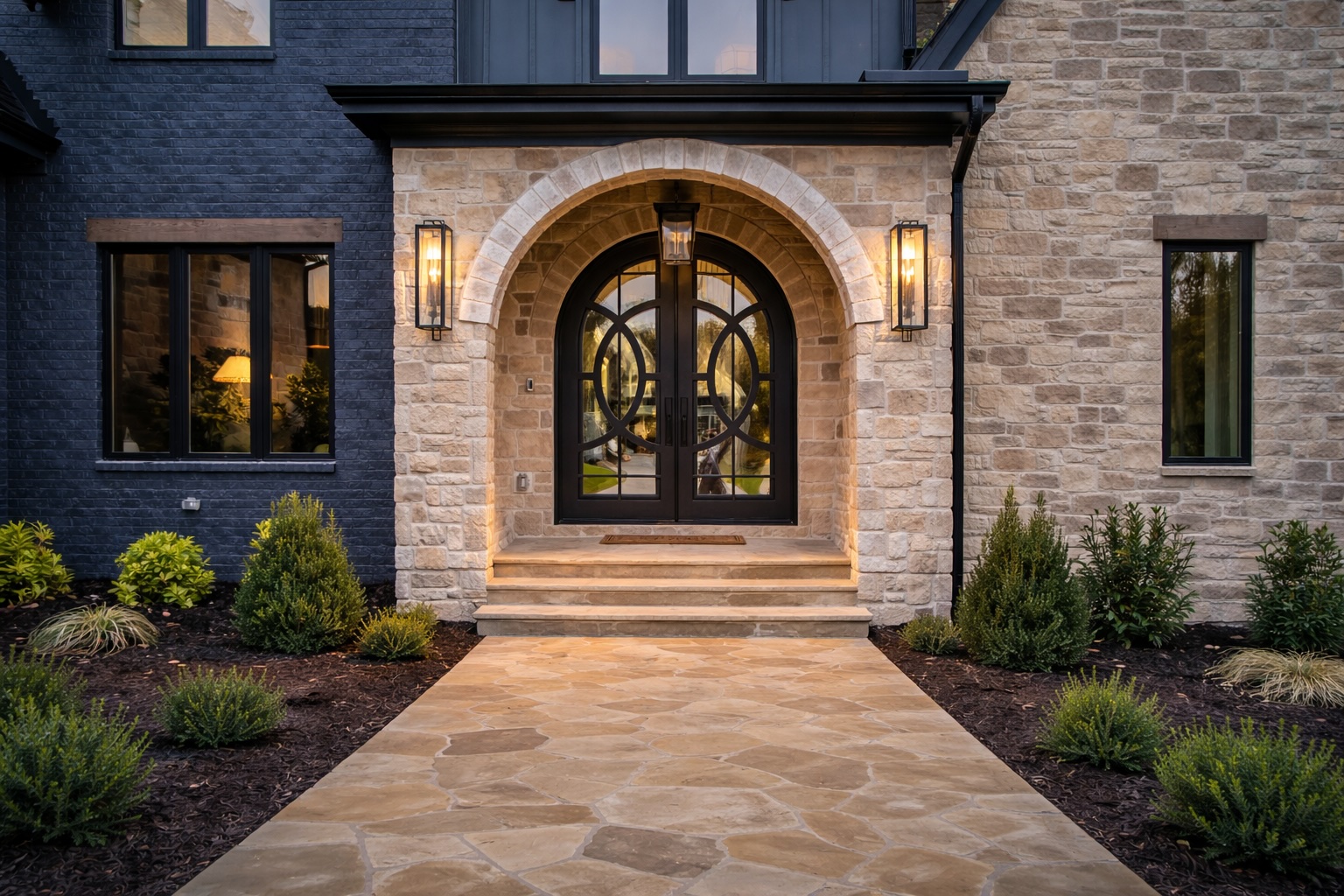
We always recommend securing your lot before finalizing a floor plan. The land dictates orientation, setbacks, garage placement, and drainage. Designing the home to the site (instead of forcing a plan onto a lot) produces a better result and avoids expensive change orders during permitting.
The Gemstone Standard
Every builder defines "standard" differently. At some firms, standard means builder-grade everything: hollow-core interior doors, basic carpet, laminate countertops, and a thermostat you program by pressing tiny buttons. That's not what we do.
The Gemstone standard includes spray foam insulation, tankless water heating, soft-close cabinetry, quartz countertops in kitchens and bathrooms, engineered hardwood on the main level, and a structured wiring package for whole-home connectivity. These aren't upgrades. They're part of the base specification for every home we build.
We set the baseline higher because retrofitting is always more expensive than building it right the first time. Adding spray foam after drywall is impossible. Running Cat6 cable through finished walls costs three times what it costs during rough-in. Our approach is to include the things you'd regret skipping, then let you upgrade from there on finishes and fixtures.
What's Included That Others Charge Extra For
This is where cost comparisons between builders break down. A per-square-foot quote means nothing without understanding what's in it. Here's what comes standard in every Gemstone home that many builders treat as upgrades:
- Spray foam insulation in the roofline and exterior walls
- Tankless gas water heater
- Whole-home mesh network pre-wiring with centralized media panel
- Smart thermostat, smart locks, and video doorbell integration
- EV-ready garage wiring (Level 2, 240V)
- Quartz countertops in kitchen, primary bath, and secondary baths
- Engineered hardwood on the entire main level
- Soft-close cabinetry and drawers throughout
- Low-E argon-filled windows
- Architectural shingle roofing with 30-year warranty
When you compare quotes, ask every builder for a line-item specification. The lowest per-square-foot number rarely stays lowest once you add back the things that were excluded.
If you're in the early stages of planning a custom build in Wake County, we're happy to walk through numbers specific to your lot and wish list. No commitment required. Just a conversation about what's realistic, what's flexible, and where your budget will have the most impact.